ACEFEVER Details Blackjack Strategies Aimed at Minimizing House Edge in 2026
 The ACEFEVER outline presents a focused review of blackjack fundamentals scheduled for emphasis in 2026, and it centers on rule selection, basic strategy application, side bet avoidance, plus bankroll controls that can bring the house edge down to 0.5 percent under optimal conditions. Observers note the material arrives as online platforms and physical casinos continue to integrate new technologies while automatic shufflers limit older advantage techniques. The piece begins by stressing table selection as the first step, because rules such as dealer stands on soft 17 or double-after-split permissions directly affect expected returns, and players who scan for these conditions before sitting down gain a measurable edge from the start. Data from industry reports shows that favorable rule sets can reduce the house advantage by several tenths of a percent compared with stricter variants commonly found in some venues.
Core Decision Framework Outlined
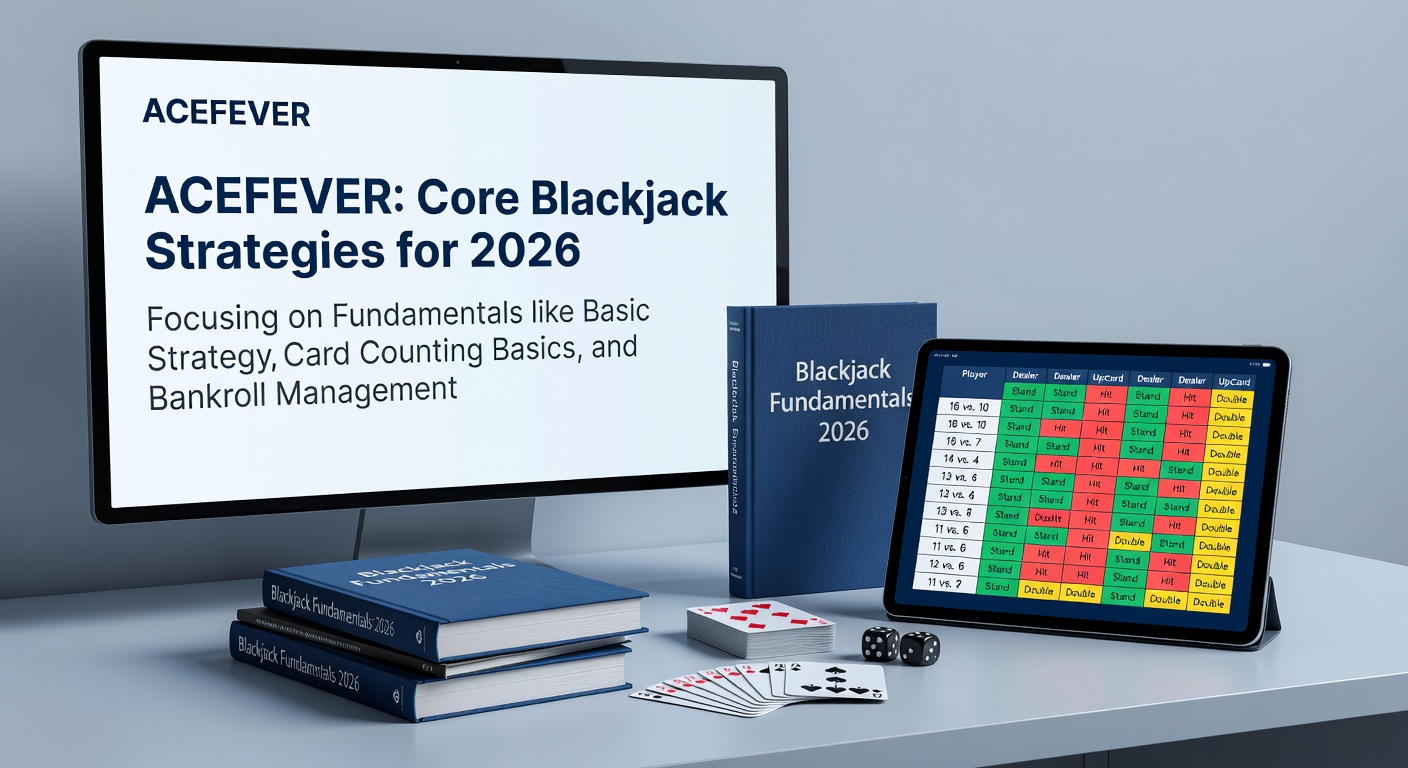
Basic strategy charts receive detailed coverage in the ACEFEVER material, which maps every possible hand against dealer upcards and specifies whether to hit, stand, double, or split. The guidance breaks these choices into clear categories: hard totals, soft totals, and pairs, with reminders that deviations from the chart increase the house edge even when other elements remain favorable. Those who follow the full matrix consistently achieve the lowest theoretical loss rates, according to simulations referenced in the outline.
Side bets come under direct scrutiny next, and the review lists common options such as insurance, 21+3, and perfect pairs while demonstrating how each carries a higher house edge than the base game. The outline advises skipping these wagers entirely because their payouts fail to offset the added risk, a point reinforced by multiple probability studies conducted over the past decade.
Bankroll Discipline and Long-Term Play
Bankroll management forms another central pillar, and the ACEFEVER summary recommends setting session limits and overall loss thresholds before play begins. The material notes that disciplined sizing prevents rapid depletion during variance swings, and it ties this practice directly to sustaining the 0.5 percent edge achieved through rule selection and chart adherence. Research from the University of Nevada, Las Vegas Center for Gaming Research indicates that players who maintain strict bankroll protocols extend their playing time and reduce emotional decision-making under pressure.
Decision trees for hitting, standing, doubling, and splitting receive expanded treatment through example hands, and the outline walks through scenarios where doubling on ten against a dealer six becomes correct while splitting eights against a ten proves advantageous. These illustrations serve to reinforce that consistent application matters more than memorization of isolated rules.
Technology Integration in Current Environments
The outline shifts to technological developments expected to shape 2026 play, beginning with AI-assisted training tools that simulate millions of hands and highlight chart deviations in real time. Live dealer streams already appear in many online lobbies, and the material observes that these formats preserve the social element while maintaining the same basic strategy requirements as physical tables. VR and AR environments receive mention as emerging options that may soon replicate full casino atmospheres from home setups, though the core mathematics remain unchanged.
Cryptocurrency payments enter the discussion as a growing feature at certain platforms, and the ACEFEVER review notes faster transaction times without altering game odds. Automatic shufflers, now standard in most large casinos, continue to neutralize traditional card counting by eliminating the shoe penetration that counters once exploited, a shift documented in reports from the Australian Gambling Research Centre.
Skill Elements Amid Changing Landscapes
Throughout the outline, emphasis remains on skill-based decisions that persist regardless of delivery method, whether online, live dealer, or hybrid VR sessions. The material points out that while technology streamlines access and security, it does not replace the need for rule awareness and disciplined execution. Players who combine favorable table conditions with chart adherence and controlled bankrolls maintain the documented 0.5 percent edge, and the piece positions these fundamentals as stable even as surrounding environments evolve through May 2026 and beyond.
Conclusion
The ACEFEVER outline compiles established principles into a single reference point for 2026, connecting rule selection, basic strategy, side bet avoidance, and bankroll controls into one coherent framework. It also acknowledges the role of AI training aids, live dealer formats, immersive technologies, and digital payments without suggesting these elements change the underlying mathematics. By highlighting the continued relevance of disciplined play against automatic shufflers and evolving casino systems, the material provides a factual snapshot of how players can approach blackjack in the coming period.