Dealer Draw Limits and Card Ranking Dynamics: Their Effects on Insurance Bets and Pair Splitting in Blackjack
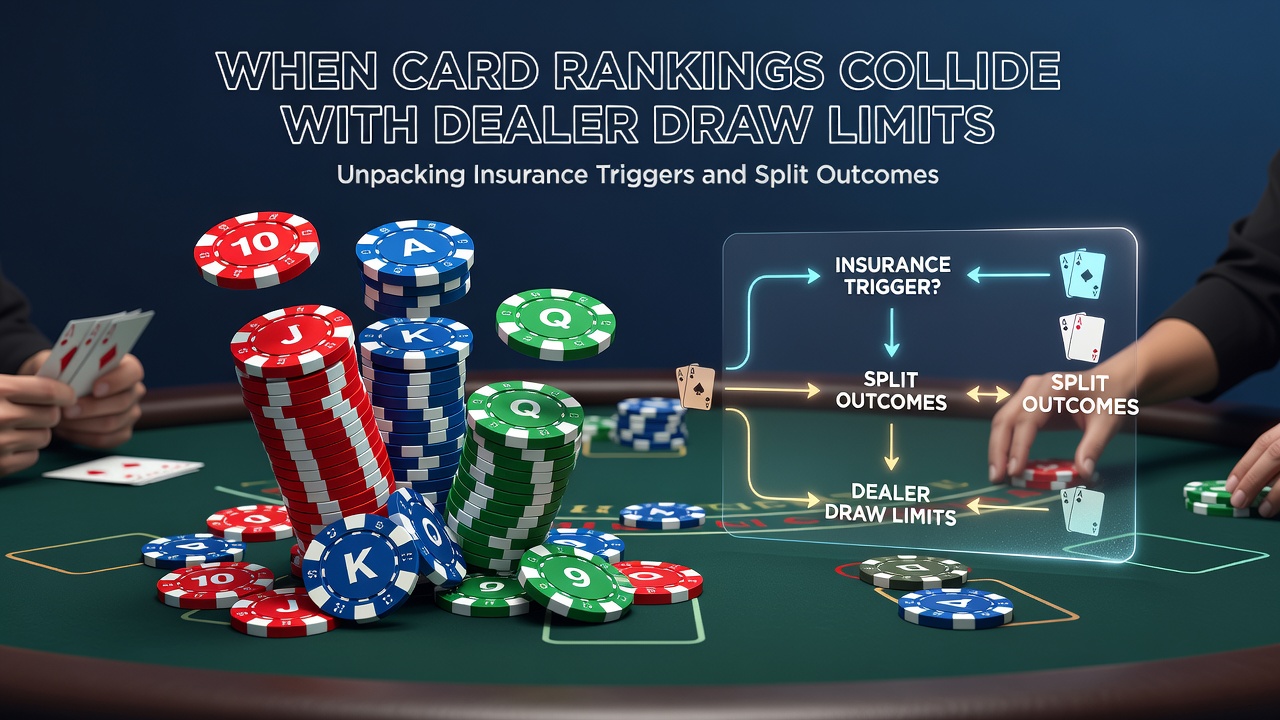
Blackjack tables operate under strict draw rules that require dealers to hit on totals of 16 or lower while standing on 17 and above, creating fixed boundaries that intersect directly with the numerical values assigned to each card rank from ace through ten and face cards. These limits shape every subsequent decision point, including when an insurance bet becomes available and how split hands resolve after a pair appears. Observers note that the interaction begins the moment a dealer reveals an ace as the upcard, at which point players receive an option to place an insurance wager equal to half their original bet, a side bet that pays two to one if the dealer’s hole card completes a blackjack.
Card rankings determine the strength of any given hand before and after splits occur, while the dealer’s mandatory draw sequence remains unchanged regardless of how many hands a player controls. Research from gaming mathematics departments indicates that the probability calculations for insurance rest solely on the remaining deck composition once an ace appears face up, with roughly one in three chances that the hole card carries a ten-value under standard multi-deck conditions. The same ranking system governs whether a player elects to split pairs of twos, threes, sevens, or tens, each choice producing separate hands that then face the dealer’s fixed hitting requirement independently.
Insurance Activation Under Fixed Dealer Constraints
Insurance triggers activate exclusively when the dealer’s upcard ranks as an ace, prompting the side bet regardless of the player’s own total. Data compiled by regulatory bodies such as the Nevada Gaming Control Board shows that insurance utilization rates fluctuate with table minimums and deck penetration, yet the underlying trigger remains constant across jurisdictions. Because the dealer must continue drawing until reaching at least seventeen, any insurance decision occurs before that sequence begins, leaving players to assess only the likelihood that the unseen card carries a ten-value rank. When multiple decks are in play, the exact odds shift slightly with each removed card, yet the structural rule stays identical.
Split Outcomes Influenced by Ranking Values
Splitting becomes available whenever a player holds two cards of identical rank, after which each new hand receives an additional card and proceeds under the same dealer draw limits. Ten-value cards, whether numbered tens or face cards, produce the strongest starting pairs yet rarely warrant splitting under basic strategy tables because the resulting hands lose the advantage of a single strong total. Lower-ranking pairs such as twos or threes often receive split recommendations when the dealer’s upcard falls between two and six, allowing each new hand an opportunity to reach a total the dealer cannot easily surpass within the established hitting rules. Figures from academic studies on probability modeling reveal that the expected value of each split hand varies directly with the starting ranks chosen and the dealer’s upcard, while the draw limit itself imposes no variation on the dealer’s behavior across those hands.
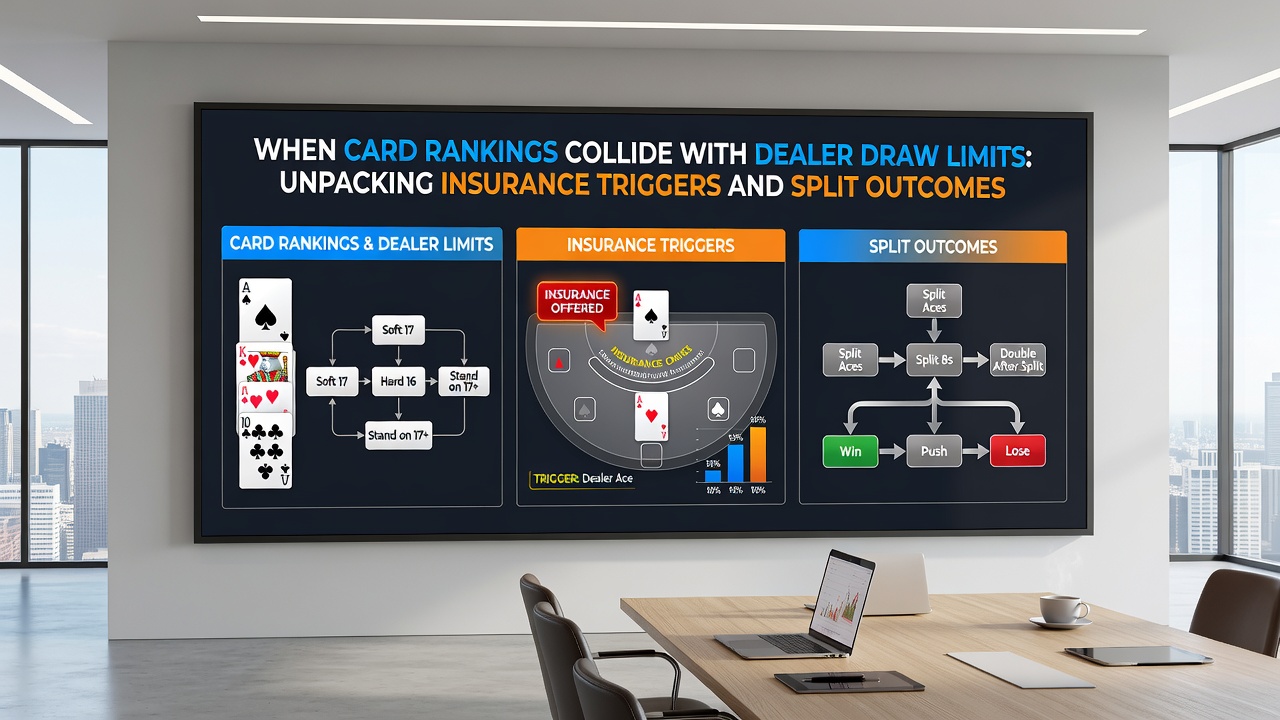
Multi-card splits introduce additional layers because each successive pair must again meet the identical-rank requirement, and the dealer continues to observe teh same seventeen threshold on every completed player hand. Reports issued by the Australian Gambling Research Centre document how these repeated splits alter payout structures when players reach totals that force the dealer into longer draw sequences, although the core ranking values remain the sole determinant of whether further splits are possible.
Interactions Between Rankings and Draw Boundaries
Card values assigned at the start of each round set the parameters for both insurance eligibility and split viability long before the dealer begins drawing additional cards. An ace upcard immediately opens the insurance window, while any pair simultaneously opens the split option, yet neither choice modifies the dealer’s obligation to hit until seventeen or higher is reached. Those who track remaining card distributions note that depletion of ten-value ranks reduces insurance success rates while simultaneously affecting the composition of potential split hands later in the shoe. The fixed draw limit ensures that dealer hands ending in busts occur at predictable frequencies tied to the upcard, independent of how many player hands resulted from splits.
July 2026 has been referenced in several ongoing regulatory reviews across North American and European markets as a potential milestone for updated reporting requirements on side-bet frequencies, including insurance and split-related wagers. Such reviews focus on data collection rather than rule alterations, leaving the fundamental collision between card rankings and dealer draw limits unchanged. Industry reports compiled by European gaming associations continue to track how these mechanics influence overall hold percentages without proposing modifications to the seventeen threshold itself.
Conclusion
The interplay between assigned card ranks and the dealer’s mandatory draw sequence produces consistent decision frameworks for insurance and splitting across all standard blackjack variants. Insurance activates solely on an ace upcard while splits arise from matching ranks, yet both processes unfold against the unchanging requirement that the dealer reach at least seventeen. Available data from multiple regulatory and research sources confirm that these boundaries remain stable even as deck composition shifts throughout a session, providing players and analysts with predictable structural elements around which all subsequent outcomes revolve.