Dealer Reveal Patterns and Their Influence on Pair Splitting Decisions in Blackjack
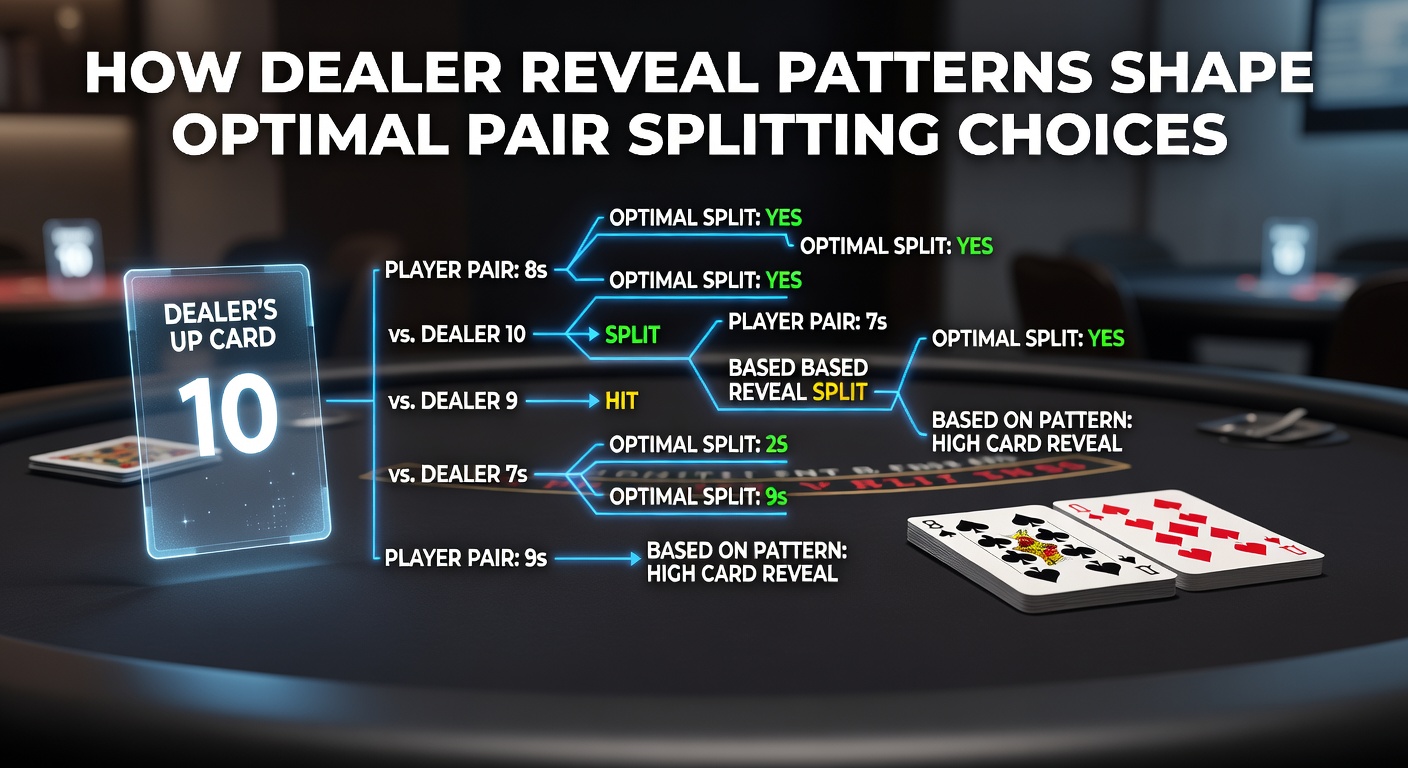
Blackjack strategy charts treat pair splitting as a core decision point where the dealer's visible card interacts with the player's matched cards to determine expected value across thousands of simulated hands, and researchers who model these scenarios consistently find that reveal patterns shift the math more than many casual players realize at first glance.
Core Mechanics of Pair Splitting Under Dealer Upcard Influence
Standard rules allow a player to split any pair into two separate hands while placing an equal bet on the second, yet the optimal choice hinges on the dealer's upcard because that single card anchors the house's probability distribution for the final total; data from large-scale simulations shows that splitting aces remains advantageous against every dealer upcard while splitting tens stays disadvantageous in nearly all cases, but the gray area lies with pairs like sevens, sixes, and twos where the dealer's reveal creates clear thresholds.
Observers note that when the dealer shows a 2 through 6 the player gains an edge by splitting more aggressively because the dealer faces a higher bust rate, whereas a dealer 7 through ace tilts the table toward standing or hitting instead of splitting in several pair combinations, and this pattern emerges repeatedly in probability tables compiled from millions of rounds.
Statistical Thresholds Revealed by Upcard Data
Studies compiled by gaming research groups demonstrate that the break-even point for splitting a pair of eights against a dealer ten sits near a 0.4 percent house edge when basic strategy is followed precisely, while the same pair against a dealer six flips to a player advantage exceeding 0.7 percent, illustrating how the single revealed card alters the entire decision matrix without requiring any additional information beyond standard rules.
Regional Rule Variations and Their Effect on Splitting Patterns
European and Australian casino regulations often enforce no-resplit rules and dealer stand-on-soft-17 policies that compress the value of splitting certain pairs compared with North American venues where resplitting up to four hands is common, and analysts tracking these differences point to Nevada Gaming Control Board reports that quantify how such rule sets change expected returns by fractions of a percent across high-volume play.
One study released by researchers at the University of Queensland examined over 50 million simulated hands under Australian-style rules and found that players who adjust splitting thresholds based on the dealer's historical upcard frequency in that specific venue reduce the house edge by an average of 0.12 percent compared with rigid chart application.
Practical Application Across Common Pair Scenarios
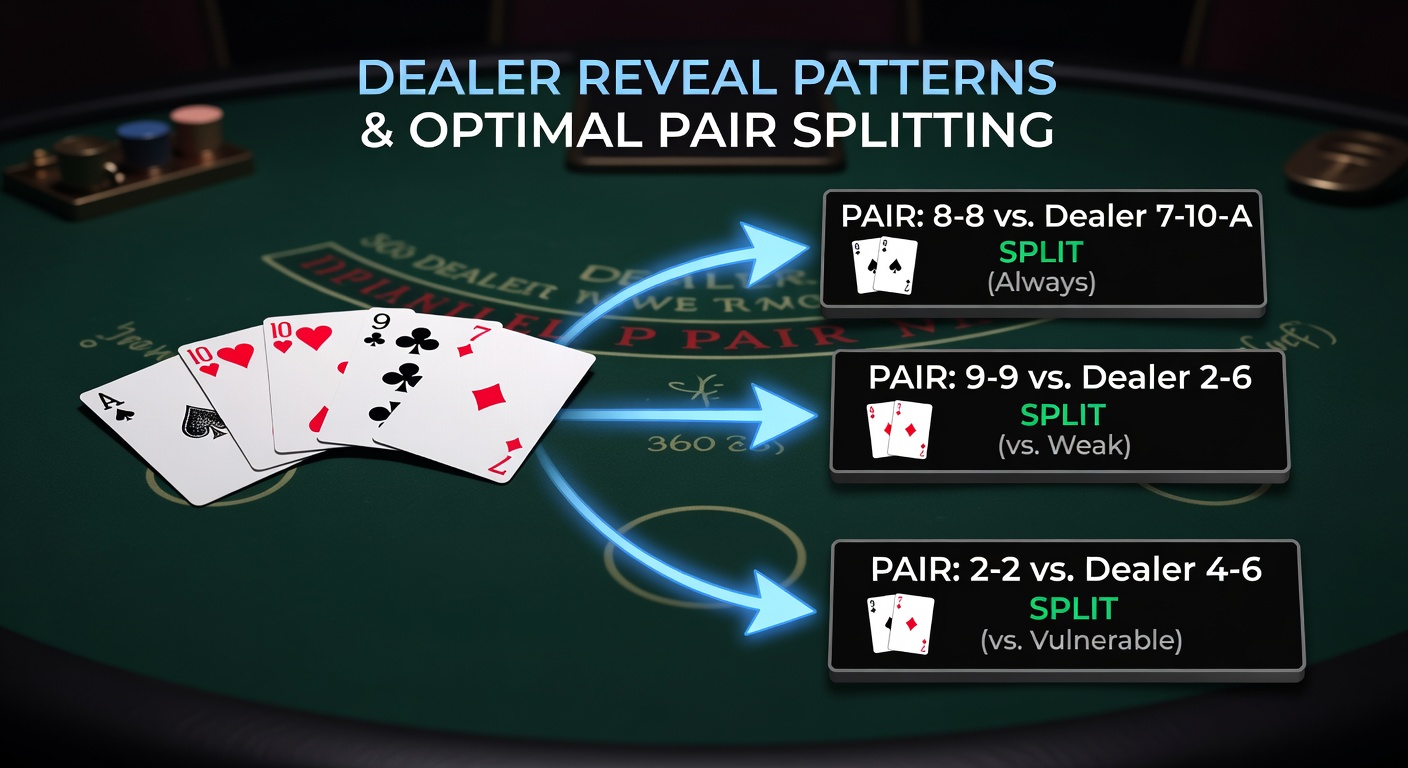
Consider a pair of nines: basic strategy calls for splitting against dealer 2 through 6 and standing against 7 through ace, yet frequency data indicates that dealers reveal 7 through ace roughly 52 percent of the time in multi-deck games, so players who track recent reveal patterns within a single session sometimes deviate when the observed distribution skews heavily toward lower cards; the math still favors the baseline rule over time, but the short-term variance becomes noticeable in live play.
Pairs of twos and threes follow a narrower window, splitting only against dealer 2 through 7 under most rule sets, and the reveal of an 8 or 9 pushes the decision toward hitting because the dealer now holds a stronger starting position that reduces the benefit of creating two weak hands from one, according to aggregated outcome logs maintained by several North American regulatory bodies.
Tracking Reveal Patterns Without Violating House Protocols
Casino floors permit players to note publicly visible upcards, and some experienced participants maintain mental tallies of dealer reveals over dozens of hands to refine their splitting choices within the bounds of basic strategy, while electronic shoes and continuous shuffle machines limit the predictive power of such observations yet do not eliminate the value of understanding how each upcard alters the probability curve for the current round.
Industry reports from the Ontario Lottery and Gaming Corporation highlight that table minimums and deck penetration rates also interact with these patterns because shallower penetration increases the weight of any single reveal in the remaining card distribution, prompting some players to adjust splitting aggression accordingly.
Conclusion
Dealer reveal patterns function as the primary variable that modulates optimal pair splitting choices across all standard blackjack rule sets, and the statistical relationships documented in regulatory data and academic simulations remain consistent regardless of venue or jurisdiction; players who internalize how each upcard shifts expected value gain a clearer framework for executing decisions that align with long-run probabilities rather than short-term outcomes.