From Card Values to Strategic Splits: Tracing Decision Pathways in Blackjack
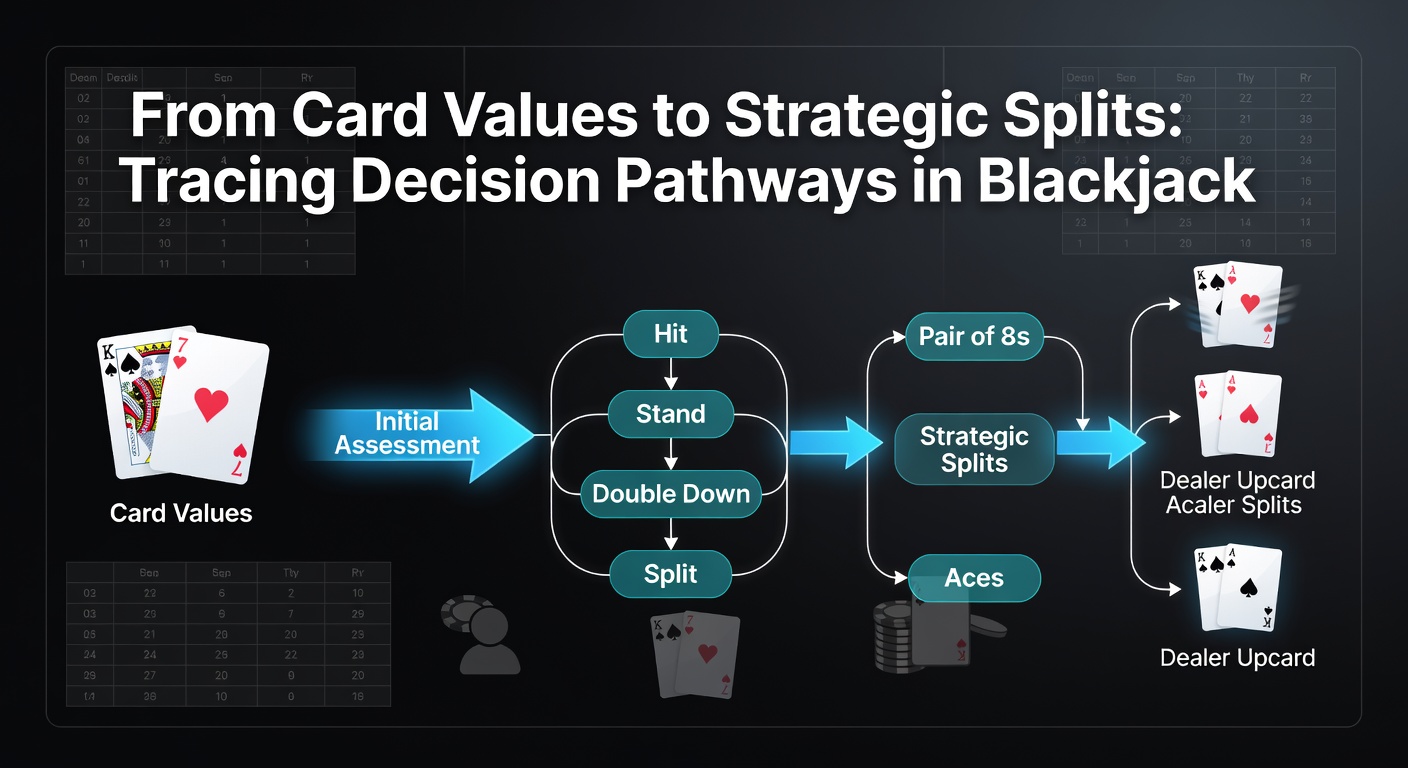
Blackjack decisions begin with the numerical values assigned to each card in the deck, and these values form the foundation for every subsequent choice a player faces at the table. Numbered cards retain their face value while face cards count as ten and aces function as either one or eleven depending on the hand total. Researchers at institutions such as the University of Nevada, Las Vegas have documented how these core values create branching pathways that guide actions like hitting, standing, doubling, or splitting pairs.
Once card values establish the player's total and the dealer's visible upcard, the decision tree expands rapidly. Players evaluate their hand against the dealer's position because optimal play accounts for the probability distribution of remaining cards. Data from multiple casino studies shows that following these value-based pathways reduces the house edge when executed consistently across repeated rounds.
Mapping Initial Hand Evaluations
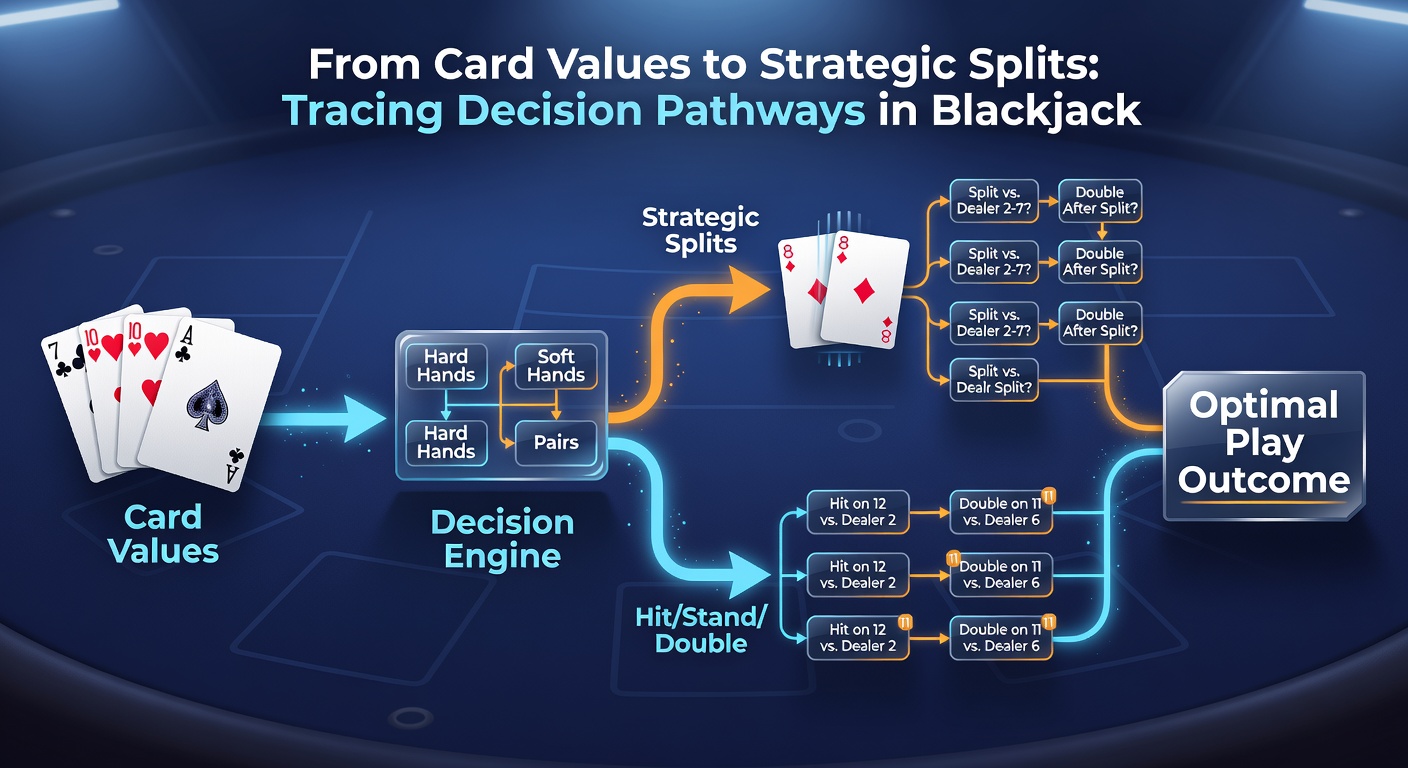
Decision pathways start the moment two cards land in front of a player. Hard totals, soft totals, and pairs each trigger distinct evaluation routes because the presence of an ace or matching ranks alters risk calculations. Observers note that players who internalize these distinctions can trace their options more efficiently during live play, moving from raw card values to concrete actions without hesitation.
Hard totals above sixteen typically lead toward standing when the dealer shows a weak upcard, whereas lower totals open pathways toward hitting. Soft totals introduce additional flexibility since the ace can shift value without busting the hand. Studies conducted by independent gaming laboratories confirm that recognizing these categories early in the hand improves adherence to established strategy charts over time.
The Transition to Pair Splitting Choices
Pair splitting represents one of the more complex branches in the decision pathway because it requires comparing the value of the paired cards against the dealer's upcard and the remaining deck composition. When a player receives two cards of equal rank, the option to split creates two separate hands that each receive an additional card. This move changes the mathematical expectation of the round and therefore demands precise evaluation.
Standard strategy pathways recommend splitting aces and eights in nearly all situations because these pairs carry specific advantages when separated. Conversely, splitting tens or face cards rarely appears in optimal charts since the strong combined total of twenty already places the player in a favorable position. Figures from the Nevada Gaming Control Board annual reports illustrate how split frequency varies by table rules and player behavior patterns across different jurisdictions.
Tracing Specific Pathways for Common Pairs
Consider a pair of sevens against a dealer upcard of five. The pathway begins with recognizing the hard total of fourteen, then accounts for the dealer's likely bust probability on that upcard. Strategy tables direct players to split in this scenario because two starting hands of seven each offer better long-term outcomes than standing on fourteen. Multiple probability models developed by academic researchers demonstrate consistent edges when this choice is applied across thousands of simulated hands.
Pairs of twos and threes follow narrower pathways that depend heavily on the dealer's upcard. Splitting becomes advisable when the dealer shows two through seven, while hitting remains preferable against higher dealer cards. These distinctions arise directly from the underlying card values and the frequency with which each upcard leads to dealer busts or strong totals.
Four pairs present an interesting case because their pathways diverge based on table rules allowing double after split. Without that option the recommended action shifts toward hitting in more situations. Industry reports from the Australian Gambling Research Centre highlight how regional rule variations influence the exact branching points within these decision trees.
Integrating Deck Composition and Rule Variations
Modern decision pathways incorporate real-time awareness of cards already removed from the shoe. Although basic strategy charts provide the primary routes, players who track remaining high and low cards can adjust split decisions at the margins. Research published through the Journal of Gambling Studies indicates that such adjustments yield measurable improvements only when deck penetration reaches sufficient depth.
Rule differences such as whether surrender is available or how many splits are permitted further modify the pathways. In June 2026 several North American jurisdictions plan to review table game regulations, which may alter splitting limits at certain venues. Those changes would require updated strategy charts that reflect new branching conditions while preserving the core logic derived from card values.
Conclusion
Card values serve as the starting coordinates for every blackjack decision, and pair splitting decisions represent one of the most intricate intersections along those pathways. By following documented strategy routes derived from probability calculations, players navigate from initial hand totals to specific actions with greater consistency. Continued analysis from regulatory bodies and academic sources ensures these pathways remain refined as rules and game conditions evolve across different markets.