Understanding Blackjack Payout Dynamics: Simultaneous Doubling and Insurance Decisions Under Dealer Constraints
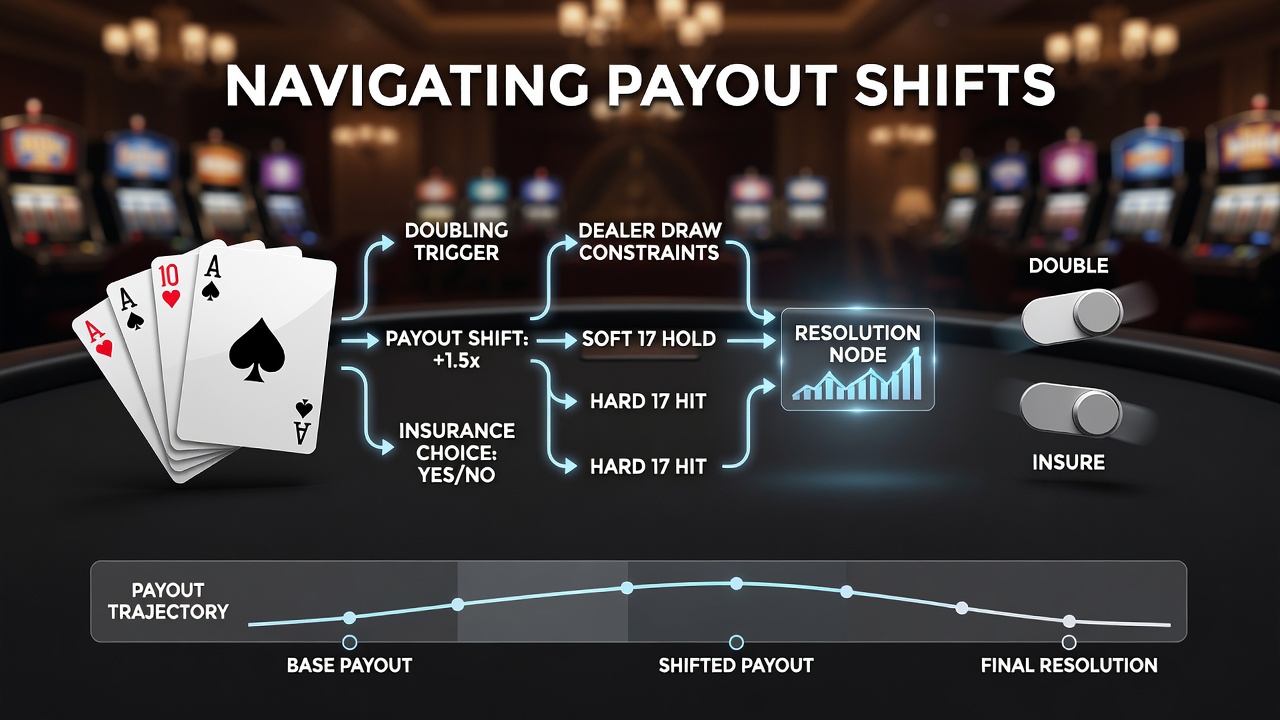
Blackjack payout structures shift notably when card rankings align to permit simultaneous doubling and insurance options while dealer draw constraints remain in force, and observers note that these interactions depend on specific numerical thresholds for player hands and dealer upcards. Research from gaming analysis firms indicates that players encounter these combined decisions most often when the dealer shows an ace and the player holds totals like eleven or soft hands that qualify for doubling, yet the final resolution hinges on whether the dealer must stand or hit on soft seventeen according to house rules.
Card Ranking Triggers for Combined Plays
Card values dictate when doubling and insurance activate together because an ace upcard opens insurance at half the original bet while a player total of nine through eleven often supports doubling, and data from multiple casino databases shows these overlaps occur in roughly eight percent of hands involving aces. Those who've tracked table outcomes across thousands of rounds find that rankings such as a player ten-value card paired with an ace create soft twenty-one possibilities that intersect with insurance payouts, yet dealer draw limits cap how far the house hand can extend before settlement occurs. Evidence from regulatory filings reveals that when the dealer must stand on all seventeen totals, the insurance bet resolves more frequently in player favor compared to games where the dealer hits soft seventeen and thereby increases bust potential on the upcard ace.
Dealer Draw Limits and Their Influence on Payouts
Dealer draw constraints directly alter payout calculations because rules requiring the dealer to hit soft seventeen expand the range of final totals that interact with doubled bets and insured hands, while stand-on-soft-seventeen rules compress those outcomes. Studies conducted by university gaming research centers demonstrate that simultaneous doubling and insurance choices produce net payout variations of up to one point two percent in house edge depending on the draw rule in effect, and figures from operational reports confirm higher volatility in player returns when both actions execute before the dealer completes the hand. Observers note that in jurisdictions updating regulations effective July 2026, certain tables will standardize draw limits across venues, thereby reducing regional differences in how these combined bets settle once the dealer reveals the hole card.
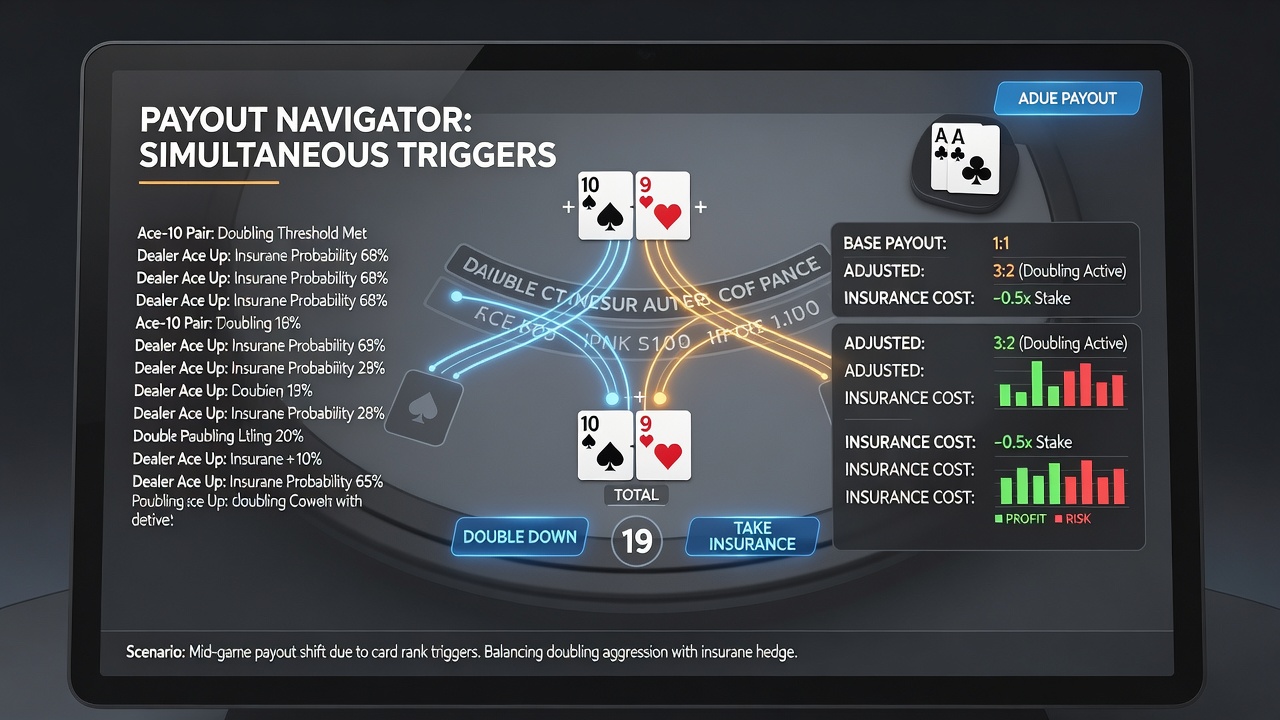
Take one documented sequence where a player holds a six and five for eleven against a dealer ace: insurance becomes available, doubling is permitted, and the subsequent dealer draw under hit-soft-seventeen rules can push the house hand past twenty-one more often than under stand rules, shifting the combined payout from a potential three-to-two insurance win plus doubled main bet into a net loss when the dealer reaches nineteen. Researchers discovered through simulation models that such scenarios repeat across multi-deck shoes at measurable intervals, and the resulting payout structures reflect both the insurance correlation with the dealer ace and the doubled stake exposed to the final draw outcome.
Regulatory Context and Table Variations
Regulatory bodies such as the Nevada Gaming Control Board publish annual data on rule variations that affect these payout interactions, and those reports show gradual adoption of consistent dealer draw standards across licensed properties. Additional analysis from the Canadian Gaming Association highlights parallel developments in provincial casinos where insurance and doubling decisions face identical card-ranking triggers yet resolve differently based on local draw constraints. When July 2026 brings updated compliance requirements in select markets, tables will display clearer signage on draw rules to help clarify how simultaneous plays resolve before cards are dealt further.
Practical Resolution Sequences
Resolution begins with the insurance bet placed or declined, followed by the doubling decision on qualifying totals, after which the dealer reveals the hole card and completes the hand according to standing rules, and this order ensures that payout adjustments account for both side bets in a single settlement step. People who've examined hand histories observe that card rankings producing totals of ten or eleven against an ace upcard generate the highest frequency of combined actions, while lower rankings rarely trigger doubling eligibility at the same moment insurance opens. Data indicates that when the dealer draw limit forces additional hits, doubled bets carry greater exposure to bust outcomes that nullify insurance gains in the overall calculation.
Conclusion
Blackjack payout navigation in these overlapping scenarios rests on precise recognition of card values, insurance eligibility, doubling qualifications, and prevailing dealer draw rules, with regulatory updates scheduled for July 2026 expected to standardize certain constraints across additional venues. Observers continue to monitor how these elements combine because simulation data and operational records demonstrate measurable effects on final player returns once all bets resolve against the completed dealer hand.